Prévisions météo à 5 jours Toronto 19-07-2026

Prévisions météo Toronto dimanche 19 juillet 19.07.2026 : ensoleillé, température de 17 °C à 23 °C.

Probabilité de précipitations 32%. Vent jusqu'à 7.5 m/s (rafales 10.22 m/s). Humidité de l'air 35–91%, pression atmosphérique 751–759 mm Hg, indice UV jusqu'à 7.4.

Alertes météo

Masquer les alertes
Moderate15 juil., 06:0215 juil., 22:02Traduire avec Google
yellow warning - air quality - in effect

air quality

Smoke is causing or expected to cause poor air quality and reduced visibility. Smoke from forest fires in northwestern Ontario is causing poor air quality to much of southern Ontario. Poor air quality may persist into Thursday for some areas. ### As smoke levels increase, health risks increase. Limit time outdoors. Consider reducing or rescheduling outdoor sports, activities and events. You may experience mild and common symptoms such as eye, nose and throat irritation, headaches or a mild cough. More serious but less common symptoms include wheezing, chest pains or severe cough. If you think you are having a medical emergency, seek immediate medical assistance. People more likely to be impacted by wildfire smoke, including people aged 65 and older, pregnant people, infants and young children, people with an existing illness or chronic health condition, and people who work outdoors, should reduce or reschedule strenuous activities outdoors and seek medical attention if experiencing symptoms. For further information visit the website https://www.airqualityontario.com/ or contact the Ontario Ministry of the Environment, Conservation and Parks at 416-314-6666. Visit http://www.airhealth.ca for information on how to reduce your health risk and your personal contribution to pollution levels, as well as for current and forecast AQHI values. Please continue to monitor alerts and forecasts issued by Environment Canada.
When indoors, keep windows and doors closed as much as possible. When there is an extreme heat event occurring with poor air quality, prioritize keeping cool. Protect your indoor air from wildfire smoke. Actions can include using the highest quality air filter that your ventilation system can handle and/or a certified portable air cleaner that can filter fine particles. If you must spend time outdoors, a well-constructed, well-fitting and properly worn respirator type mask (such as a NIOSH-certified N95 or equivalent respirator) can reduce your exposure to the fine particles in the smoke. Even though exposure may be reduced, there can still be risks to health. Check in on others who are in your care or live nearby who may be more likely to be impacted by wildfire smoke. Always follow guidance from local authorities. Learn more at https://www.canada.ca/wildfire-smoke.
Severe15 juil., 08:2116 juil., 00:21Traduire avec Google
orange warning - air quality - in effect

air quality

Smoke from wildfires in northwestern Ontario is causing very poor air quality and reduced visibility. Conditions may improve Friday morning. ### During heavy smoke conditions, everyone’s health is at risk regardless of their age or health status. Limit time outdoors. Reschedule or cancel outdoor sports, activities and events. You may experience mild and common symptoms such as eye, nose and throat irritation, headaches or a mild cough. More serious but less common symptoms include wheezing, chest pains or severe cough. If you think you are having a medical emergency, seek immediate medical assistance. People more likely to be impacted by wildfire smoke, including people aged 65 and older, pregnant people, infants and young children, people with an existing illness or chronic health condition, and people who work outdoors, should avoid strenuous activities outdoors and seek medical attention if experiencing symptoms. For further information visit the website https://www.airqualityontario.com/ or contact the Ontario Ministry of the Environment, Conservation and Parks at 416-314-6666. Visit http://www.airhealth.ca for information on how to reduce your health risk and your personal contribution to pollution levels, as well as for current and forecast AQHI values. Please continue to monitor alerts and forecasts issued by Environment Canada.
When indoors, keep windows and doors closed as much as possible. When there is an extreme heat event occurring with poor air quality, prioritize keeping cool. Protect your indoor air from wildfire smoke. Actions can include using the highest quality air filter that your ventilation system can handle and/or a certified portable air cleaner that can filter fine particles. If you must spend time outdoors, limit the time as much as possible. A well-constructed, well-fitting and properly worn respirator type mask (such as a NIOSH-certified N95 or equivalent respirator) can reduce your exposure to the fine particles in the smoke. Even though exposure may be reduced, there can still be risks to health. Check in on others who are in your care or live nearby who may be more likely to be impacted by wildfire smoke. Always follow guidance from local authorities. Learn more at https://www.canada.ca/wildfire-smoke.
Severe15 juil., 08:2116 juil., 00:21Traduire avec Google
orange warning - air quality - in effect

air quality

### During heavy smoke conditions, everyone’s health is at risk regardless of their age or health status. Limit time outdoors. Reschedule or cancel outdoor sports, activities and events. You may experience mild and common symptoms such as eye, nose and throat irritation, headaches or a mild cough. More serious but less common symptoms include wheezing, chest pains or severe cough. If you think you are having a medical emergency, seek immediate medical assistance. People more likely to be impacted by wildfire smoke, including people aged 65 and older, pregnant people, infants and young children, people with an existing illness or chronic health condition, and people who work outdoors, should avoid strenuous activities outdoors and seek medical attention if experiencing symptoms. For further information visit the website https://www.airqualityontario.com/ or contact the Ontario Ministry of the Environment, Conservation and Parks at 416-314-6666. Visit http://www.airhealth.ca for information on how to reduce your health risk and your personal contribution to pollution levels, as well as for current and forecast AQHI values. Please continue to monitor alerts and forecasts issued by Environment Canada.
When indoors, keep windows and doors closed as much as possible. When there is an extreme heat event occurring with poor air quality, prioritize keeping cool. Protect your indoor air from wildfire smoke. Actions can include using the highest quality air filter that your ventilation system can handle and/or a certified portable air cleaner that can filter fine particles. If you must spend time outdoors, limit the time as much as possible. A well-constructed, well-fitting and properly worn respirator type mask (such as a NIOSH-certified N95 or equivalent respirator) can reduce your exposure to the fine particles in the smoke. Even though exposure may be reduced, there can still be risks to health. Check in on others who are in your care or live nearby who may be more likely to be impacted by wildfire smoke. Always follow guidance from local authorities. Learn more at https://www.canada.ca/wildfire-smoke.
Severe15 juil., 14:1116 juil., 06:11Traduire avec Google
orange warning - air quality - in effect

air quality

Smoke from wildfires in northwestern Ontario is causing very poor air quality and reduced visibility. Conditions may improve Friday morning. ### During heavy smoke conditions, everyone’s health is at risk regardless of their age or health status. Limit time outdoors. Reschedule or cancel outdoor sports, activities and events. You may experience mild and common symptoms such as eye, nose and throat irritation, headaches or a mild cough. More serious but less common symptoms include wheezing, chest pains or severe cough. If you think you are having a medical emergency, seek immediate medical assistance. People more likely to be impacted by wildfire smoke, including people aged 65 and older, pregnant people, infants and young children, people with an existing illness or chronic health condition, and people who work outdoors, should avoid strenuous activities outdoors and seek medical attention if experiencing symptoms. For further information visit the website https://www.airqualityontario.com/ or contact the Ontario Ministry of the Environment, Conservation and Parks at 416-314-6666. Visit http://www.airhealth.ca for information on how to reduce your health risk and your personal contribution to pollution levels, as well as for current and forecast AQHI values. Please continue to monitor alerts and forecasts issued by Environment Canada.
When indoors, keep windows and doors closed as much as possible. When there is an extreme heat event occurring with poor air quality, prioritize keeping cool. Protect your indoor air from wildfire smoke. Actions can include using the highest quality air filter that your ventilation system can handle and/or a certified portable air cleaner that can filter fine particles. If you must spend time outdoors, limit the time as much as possible. A well-constructed, well-fitting and properly worn respirator type mask (such as a NIOSH-certified N95 or equivalent respirator) can reduce your exposure to the fine particles in the smoke. Even though exposure may be reduced, there can still be risks to health. Check in on others who are in your care or live nearby who may be more likely to be impacted by wildfire smoke. Always follow guidance from local authorities. Learn more at https://www.canada.ca/wildfire-smoke.
Severe15 juil., 14:1116 juil., 06:11Traduire avec Google
orange warning - air quality - in effect

air quality

### During heavy smoke conditions, everyone’s health is at risk regardless of their age or health status. Limit time outdoors. Reschedule or cancel outdoor sports, activities and events. You may experience mild and common symptoms such as eye, nose and throat irritation, headaches or a mild cough. More serious but less common symptoms include wheezing, chest pains or severe cough. If you think you are having a medical emergency, seek immediate medical assistance. People more likely to be impacted by wildfire smoke, including people aged 65 and older, pregnant people, infants and young children, people with an existing illness or chronic health condition, and people who work outdoors, should avoid strenuous activities outdoors and seek medical attention if experiencing symptoms. For further information visit the website https://www.airqualityontario.com/ or contact the Ontario Ministry of the Environment, Conservation and Parks at 416-314-6666. Visit http://www.airhealth.ca for information on how to reduce your health risk and your personal contribution to pollution levels, as well as for current and forecast AQHI values. Please continue to monitor alerts and forecasts issued by Environment Canada.
When indoors, keep windows and doors closed as much as possible. When there is an extreme heat event occurring with poor air quality, prioritize keeping cool. Protect your indoor air from wildfire smoke. Actions can include using the highest quality air filter that your ventilation system can handle and/or a certified portable air cleaner that can filter fine particles. If you must spend time outdoors, limit the time as much as possible. A well-constructed, well-fitting and properly worn respirator type mask (such as a NIOSH-certified N95 or equivalent respirator) can reduce your exposure to the fine particles in the smoke. Even though exposure may be reduced, there can still be risks to health. Check in on others who are in your care or live nearby who may be more likely to be impacted by wildfire smoke. Always follow guidance from local authorities. Learn more at https://www.canada.ca/wildfire-smoke.
Lever du soleil 05:53
Coucher du soleil 20:54
Premier Quartier33% illuminé
Lever de la lune 12:04 · Coucher de la lune 23:33
Graphique
Tableau
dim. 19 juil. 2026
TempératureRisque de pluieCouverture nuageuseHumiditéPressionVentIndice UV
00:00Météo
Couvert
21 °C30% 99%91%751 mm HgNNO 330° 6.19 (8.78) m/s0
01:00Météo
Pluie éparse possible
20 °C32% (0.03 mm/h)100%89%752 mm HgNNO 340° 6.81 (9.42) m/s0
02:00Météo
Pluie éparse possible
19 °C24% (0.01 mm/h)87%84%752 mm HgNNO 346° 7.5 (10.22) m/s0
03:00Météo
Nuageux
18 °C21% 87%81%754 mm HgNNO 347° 7 (9.17) m/s0
04:00Météo
Nuageux
18 °C15% 67%76%755 mm HgN 351° 6.69 (8.75) m/s0
05:00Météo
Partiellement nuageux
18 °C13% 57%74%755 mm HgN 349° 6.61 (8.67) m/s0
06:00Météo
Ensoleillé
17 °C7% 8%73%755 mm HgN 352° 6.61 (8.86) m/s0
07:00Météo
Ensoleillé
17 °C7% 5%74%756 mm HgNNO 348° 6 (8.06) m/s0.2
08:00Météo
Ensoleillé
17 °C7% 0%73%757 mm HgNNO 344° 6 (7.42) m/s0.6
09:00Météo
Ensoleillé
18 °C4% 0%63%758 mm HgNNO 347° 5.89 (6.94) m/s1.9
10:00Météo
Ensoleillé
20 °C2% 0%53%758 mm HgNNO 343° 5.69 (6.61) m/s3.4
11:00Météo
Ensoleillé
21 °C1% 0%46%758 mm HgNNO 338° 5.81 (6.67) m/s5
12:00Météo
Ensoleillé
22 °C1% 0%40%758 mm HgNNO 334° 5.81 (6.67) m/s6.6
13:00Météo
Ensoleillé
23 °C1% 0%35%758 mm HgNNO 332° 5.81 (6.67) m/s7.4
14:00Météo
Ensoleillé
23 °C1% 2%35%758 mm HgNNO 331° 5.5 (6.33) m/s7.3
15:00Météo
Partiellement nuageux
23 °C2% 34%36%758 mm HgNNO 332° 6.11 (7.03) m/s6
16:00Météo
Ensoleillé
23 °C1% 4%36%758 mm HgNNO 330° 6.31 (7.25) m/s4.6
17:00Météo
Ensoleillé
23 °C1% 3%38%758 mm HgNNO 330° 6 (7.08) m/s3
18:00Météo
Ensoleillé
22 °C2% 17%40%758 mm HgNNO 331° 5.61 (6.94) m/s1.5
19:00Météo
Ensoleillé
21 °C2% 24%43%758 mm HgNO 324° 4.5 (6) m/s0.6
20:00Météo
Partiellement nuageux
20 °C3% 33%47%758 mm HgNO 321° 3.5 (5.14) m/s0.1
21:00Météo
Partiellement nuageux
19 °C4% 33%51%758 mm HgNO 318° 2.5 (4.22) m/s0
22:00Météo
Partiellement nuageux
19 °C4% 31%52%759 mm HgNO 308° 2.5 (4.19) m/s0
23:00Météo
Dégagé
18 °C3% 19%53%758 mm HgONO 302° 2.19 (3.94) m/s0
dim. 19 juil. 2026

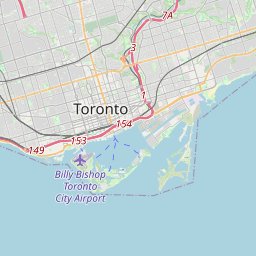
Toronto sur la carte

Sources de données et méthodologie

Nos prévisions météo sont alimentées par un fournisseur professionnel de données météorologiques qui agrège les données des services météorologiques nationaux, des observations satellites, des réseaux radar et de plus de 80 000 stations météorologiques dans le monde. Les données de prévision sont mises à jour plusieurs fois par jour. Nous convertissons les données brutes en résumés clairs — vitesse du vent en m/s, pression en mm Hg — afin que vous puissiez planifier votre journée en toute confiance.