5-day weather forecast Toronto 19-07-2026
Weather forecast Toronto Sunday, July 19 19.07.2026: sunny, temperature from 17 °C to 23 °C.
Precipitation probability 32%. Wind up to 7.5 m/s (gusts 10.22 m/s). Air humidity 35–91%, atmospheric pressure 751–759 mm Hg, UV index up to 7.4.
Weather Alerts
Hide alertsyellow warning - air quality - in effect
air quality
Smoke is causing or expected to cause poor air quality and reduced visibility.
Smoke from forest fires in northwestern Ontario is causing poor air quality to much of southern Ontario. Poor air quality may persist into Thursday for some areas.
###
As smoke levels increase, health risks increase. Limit time outdoors. Consider reducing or rescheduling outdoor sports, activities and events.
You may experience mild and common symptoms such as eye, nose and throat irritation, headaches or a mild cough. More serious but less common symptoms include wheezing, chest pains or severe cough. If you think you are having a medical emergency, seek immediate medical assistance.
People more likely to be impacted by wildfire smoke, including people aged 65 and older, pregnant people, infants and young children, people with an existing illness or chronic health condition, and people who work outdoors, should reduce or reschedule strenuous activities outdoors and seek medical attention if experiencing symptoms.
For further information visit the website https://www.airqualityontario.com/ or contact the Ontario Ministry of the Environment, Conservation and Parks at 416-314-6666.
Visit http://www.airhealth.ca for information on how to reduce your health risk and your personal contribution to pollution levels, as well as for current and forecast AQHI values.
Please continue to monitor alerts and forecasts issued by Environment Canada.
When indoors, keep windows and doors closed as much as possible. When there is an extreme heat event occurring with poor air quality, prioritize keeping cool.
Protect your indoor air from wildfire smoke. Actions can include using the highest quality air filter that your ventilation system can handle and/or a certified portable air cleaner that can filter fine particles.
If you must spend time outdoors, a well-constructed, well-fitting and properly worn respirator type mask (such as a NIOSH-certified N95 or equivalent respirator) can reduce your exposure to the fine particles in the smoke. Even though exposure may be reduced, there can still be risks to health.
Check in on others who are in your care or live nearby who may be more likely to be impacted by wildfire smoke.
Always follow guidance from local authorities.
Learn more at https://www.canada.ca/wildfire-smoke.
orange warning - air quality - in effect
air quality
Smoke from wildfires in northwestern Ontario is causing very poor air quality and reduced visibility. Conditions may improve Friday morning.
###
During heavy smoke conditions, everyone’s health is at risk regardless of their age or health status.
Limit time outdoors. Reschedule or cancel outdoor sports, activities and events.
You may experience mild and common symptoms such as eye, nose and throat irritation, headaches or a mild cough. More serious but less common symptoms include wheezing, chest pains or severe cough. If you think you are having a medical emergency, seek immediate medical assistance.
People more likely to be impacted by wildfire smoke, including people aged 65 and older, pregnant people, infants and young children, people with an existing illness or chronic health condition, and people who work outdoors, should avoid strenuous activities outdoors and seek medical attention if experiencing symptoms.
For further information visit the website https://www.airqualityontario.com/ or contact the Ontario Ministry of the Environment, Conservation and Parks at 416-314-6666.
Visit http://www.airhealth.ca for information on how to reduce your health risk and your personal contribution to pollution levels, as well as for current and forecast AQHI values.
Please continue to monitor alerts and forecasts issued by Environment Canada.
When indoors, keep windows and doors closed as much as possible. When there is an extreme heat event occurring with poor air quality, prioritize keeping cool.
Protect your indoor air from wildfire smoke. Actions can include using the highest quality air filter that your ventilation system can handle and/or a certified portable air cleaner that can filter fine particles.
If you must spend time outdoors, limit the time as much as possible. A well-constructed, well-fitting and properly worn respirator type mask (such as a NIOSH-certified N95 or equivalent respirator) can reduce your exposure to the fine particles in the smoke. Even though exposure may be reduced, there can still be risks to health.
Check in on others who are in your care or live nearby who may be more likely to be impacted by wildfire smoke.
Always follow guidance from local authorities.
Learn more at https://www.canada.ca/wildfire-smoke.
orange warning - air quality - in effect
air quality
###
During heavy smoke conditions, everyone’s health is at risk regardless of their age or health status.
Limit time outdoors. Reschedule or cancel outdoor sports, activities and events.
You may experience mild and common symptoms such as eye, nose and throat irritation, headaches or a mild cough. More serious but less common symptoms include wheezing, chest pains or severe cough. If you think you are having a medical emergency, seek immediate medical assistance.
People more likely to be impacted by wildfire smoke, including people aged 65 and older, pregnant people, infants and young children, people with an existing illness or chronic health condition, and people who work outdoors, should avoid strenuous activities outdoors and seek medical attention if experiencing symptoms.
For further information visit the website https://www.airqualityontario.com/ or contact the Ontario Ministry of the Environment, Conservation and Parks at 416-314-6666.
Visit http://www.airhealth.ca for information on how to reduce your health risk and your personal contribution to pollution levels, as well as for current and forecast AQHI values.
Please continue to monitor alerts and forecasts issued by Environment Canada.
When indoors, keep windows and doors closed as much as possible. When there is an extreme heat event occurring with poor air quality, prioritize keeping cool.
Protect your indoor air from wildfire smoke. Actions can include using the highest quality air filter that your ventilation system can handle and/or a certified portable air cleaner that can filter fine particles.
If you must spend time outdoors, limit the time as much as possible. A well-constructed, well-fitting and properly worn respirator type mask (such as a NIOSH-certified N95 or equivalent respirator) can reduce your exposure to the fine particles in the smoke. Even though exposure may be reduced, there can still be risks to health.
Check in on others who are in your care or live nearby who may be more likely to be impacted by wildfire smoke.
Always follow guidance from local authorities.
Learn more at https://www.canada.ca/wildfire-smoke.
orange warning - air quality - in effect
air quality
Smoke from wildfires in northwestern Ontario is causing very poor air quality and reduced visibility. Conditions may improve Friday morning.
###
During heavy smoke conditions, everyone’s health is at risk regardless of their age or health status.
Limit time outdoors. Reschedule or cancel outdoor sports, activities and events.
You may experience mild and common symptoms such as eye, nose and throat irritation, headaches or a mild cough. More serious but less common symptoms include wheezing, chest pains or severe cough. If you think you are having a medical emergency, seek immediate medical assistance.
People more likely to be impacted by wildfire smoke, including people aged 65 and older, pregnant people, infants and young children, people with an existing illness or chronic health condition, and people who work outdoors, should avoid strenuous activities outdoors and seek medical attention if experiencing symptoms.
For further information visit the website https://www.airqualityontario.com/ or contact the Ontario Ministry of the Environment, Conservation and Parks at 416-314-6666.
Visit http://www.airhealth.ca for information on how to reduce your health risk and your personal contribution to pollution levels, as well as for current and forecast AQHI values.
Please continue to monitor alerts and forecasts issued by Environment Canada.
When indoors, keep windows and doors closed as much as possible. When there is an extreme heat event occurring with poor air quality, prioritize keeping cool.
Protect your indoor air from wildfire smoke. Actions can include using the highest quality air filter that your ventilation system can handle and/or a certified portable air cleaner that can filter fine particles.
If you must spend time outdoors, limit the time as much as possible. A well-constructed, well-fitting and properly worn respirator type mask (such as a NIOSH-certified N95 or equivalent respirator) can reduce your exposure to the fine particles in the smoke. Even though exposure may be reduced, there can still be risks to health.
Check in on others who are in your care or live nearby who may be more likely to be impacted by wildfire smoke.
Always follow guidance from local authorities.
Learn more at https://www.canada.ca/wildfire-smoke.
orange warning - air quality - in effect
air quality
###
During heavy smoke conditions, everyone’s health is at risk regardless of their age or health status.
Limit time outdoors. Reschedule or cancel outdoor sports, activities and events.
You may experience mild and common symptoms such as eye, nose and throat irritation, headaches or a mild cough. More serious but less common symptoms include wheezing, chest pains or severe cough. If you think you are having a medical emergency, seek immediate medical assistance.
People more likely to be impacted by wildfire smoke, including people aged 65 and older, pregnant people, infants and young children, people with an existing illness or chronic health condition, and people who work outdoors, should avoid strenuous activities outdoors and seek medical attention if experiencing symptoms.
For further information visit the website https://www.airqualityontario.com/ or contact the Ontario Ministry of the Environment, Conservation and Parks at 416-314-6666.
Visit http://www.airhealth.ca for information on how to reduce your health risk and your personal contribution to pollution levels, as well as for current and forecast AQHI values.
Please continue to monitor alerts and forecasts issued by Environment Canada.
When indoors, keep windows and doors closed as much as possible. When there is an extreme heat event occurring with poor air quality, prioritize keeping cool.
Protect your indoor air from wildfire smoke. Actions can include using the highest quality air filter that your ventilation system can handle and/or a certified portable air cleaner that can filter fine particles.
If you must spend time outdoors, limit the time as much as possible. A well-constructed, well-fitting and properly worn respirator type mask (such as a NIOSH-certified N95 or equivalent respirator) can reduce your exposure to the fine particles in the smoke. Even though exposure may be reduced, there can still be risks to health.
Check in on others who are in your care or live nearby who may be more likely to be impacted by wildfire smoke.
Always follow guidance from local authorities.
Learn more at https://www.canada.ca/wildfire-smoke.
Sunrise 05:53
Sunset 20:54
Sunset 20:54
First Quarter33% illuminated
Moonrise 12:04 · Moonset 23:33
Chart
Table
Sun, Jul 19, 2026
| Temperature | Rain chance | Cloud cover | Humidity | Pressure | Wind | UV Index | ||
|---|---|---|---|---|---|---|---|---|
| 00:00 | Overcast | 21 °C | 30% | 99% | 91% | 751 mm Hg | NNW 330° 6.19 (8.78) m/s | 0 |
| 01:00 | Patchy rain possible | 20 °C | 32% (0.03 mm/hr) | 100% | 89% | 752 mm Hg | NNW 340° 6.81 (9.42) m/s | 0 |
| 02:00 | Patchy rain possible | 19 °C | 24% (0.01 mm/hr) | 87% | 84% | 752 mm Hg | NNW 346° 7.5 (10.22) m/s | 0 |
| 03:00 | Cloudy | 18 °C | 21% | 87% | 81% | 754 mm Hg | NNW 347° 7 (9.17) m/s | 0 |
| 04:00 | Cloudy | 18 °C | 15% | 67% | 76% | 755 mm Hg | N 351° 6.69 (8.75) m/s | 0 |
| 05:00 | Partly cloudy | 18 °C | 13% | 57% | 74% | 755 mm Hg | N 349° 6.61 (8.67) m/s | 0 |
| 06:00 | Sunny | 17 °C | 7% | 8% | 73% | 755 mm Hg | N 352° 6.61 (8.86) m/s | 0 |
| 07:00 | Sunny | 17 °C | 7% | 5% | 74% | 756 mm Hg | NNW 348° 6 (8.06) m/s | 0.2 |
| 08:00 | Sunny | 17 °C | 7% | 0% | 73% | 757 mm Hg | NNW 344° 6 (7.42) m/s | 0.6 |
| 09:00 | Sunny | 18 °C | 4% | 0% | 63% | 758 mm Hg | NNW 347° 5.89 (6.94) m/s | 1.9 |
| 10:00 | Sunny | 20 °C | 2% | 0% | 53% | 758 mm Hg | NNW 343° 5.69 (6.61) m/s | 3.4 |
| 11:00 | Sunny | 21 °C | 1% | 0% | 46% | 758 mm Hg | NNW 338° 5.81 (6.67) m/s | 5 |
| 12:00 | Sunny | 22 °C | 1% | 0% | 40% | 758 mm Hg | NNW 334° 5.81 (6.67) m/s | 6.6 |
| 13:00 | Sunny | 23 °C | 1% | 0% | 35% | 758 mm Hg | NNW 332° 5.81 (6.67) m/s | 7.4 |
| 14:00 | Sunny | 23 °C | 1% | 2% | 35% | 758 mm Hg | NNW 331° 5.5 (6.33) m/s | 7.3 |
| 15:00 | Partly cloudy | 23 °C | 2% | 34% | 36% | 758 mm Hg | NNW 332° 6.11 (7.03) m/s | 6 |
| 16:00 | Sunny | 23 °C | 1% | 4% | 36% | 758 mm Hg | NNW 330° 6.31 (7.25) m/s | 4.6 |
| 17:00 | Sunny | 23 °C | 1% | 3% | 38% | 758 mm Hg | NNW 330° 6 (7.08) m/s | 3 |
| 18:00 | Sunny | 22 °C | 2% | 17% | 40% | 758 mm Hg | NNW 331° 5.61 (6.94) m/s | 1.5 |
| 19:00 | Sunny | 21 °C | 2% | 24% | 43% | 758 mm Hg | NW 324° 4.5 (6) m/s | 0.6 |
| 20:00 | Partly cloudy | 20 °C | 3% | 33% | 47% | 758 mm Hg | NW 321° 3.5 (5.14) m/s | 0.1 |
| 21:00 | Partly cloudy | 19 °C | 4% | 33% | 51% | 758 mm Hg | NW 318° 2.5 (4.22) m/s | 0 |
| 22:00 | Partly cloudy | 19 °C | 4% | 31% | 52% | 759 mm Hg | NW 308° 2.5 (4.19) m/s | 0 |
| 23:00 | Clear | 18 °C | 3% | 19% | 53% | 758 mm Hg | WNW 302° 2.19 (3.94) m/s | 0 |
Sun, Jul 19, 2026
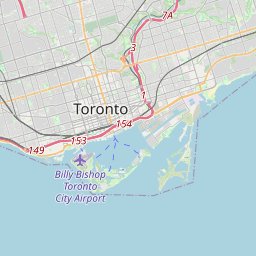
Toronto on the map
Data Sources & Methodology
Our weather forecasts are powered by a professional weather data provider that aggregates data from national weather services, satellite observations, radar networks, and over 80,000 weather stations worldwide. Forecast data is updated multiple times daily. We convert raw data into clear summaries — wind speed in m/s, pressure in mmHg — so you can plan your day with confidence.